

How to Talk to a Client About Hair Loss: 6 Salon Scripts
How to talk to a client about hair loss: word-for-word scripts for six salon situations, a say-this-not-that table, privacy rules and referral wording.

The simplest way to talk to a client about hair loss is to ask permission, describe what you see in neutral words, ask what they have noticed, and offer a next step. Do it privately, and stop before naming a condition or a cause. Knowing how to talk to a client about hair loss is mostly knowing where your part of the conversation ends.
A stylist or barber sees the same scalp every few weeks, from angles the client cannot. That makes you the person most likely to spot a change early. The scripts below give you the words for six common situations.
How do you talk to a client about hair loss without overstepping?
Follow four steps in order: ask permission, describe what you see, ask what they have noticed, and offer a next step. Never name a condition, state a cause, or promise regrowth. Your role is to recognize, support and refer. A dermatologist or physician diagnoses and treats.
- Ask permission. "Can I mention something I've noticed?"
- Describe. Location, size, and how it compares with the last visit. Nothing else.
- Ask. "Have you noticed this?" Then listen.
- Offer a next step. Photos, a change in service, or a referral.
Lower your voice and say it at the chair, not at the shampoo bowl with other clients nearby. If your space is open, wait until you can turn the chair away or step aside.
What do you say to a client with thinning hair?
Describe the change and ask a question. Tell the client what you see, where, and how it compares with earlier visits, then let them respond before you say anything more. The six scripts below cover the situations that come up most often in a salon or barbershop.
1. You notice thinning and the client has not mentioned it
"Before I start, can I mention something I've noticed? Your part looks a little wider through the top than it did at your last few visits. Have you noticed any change yourself?"
If they say yes:
"I can't tell you why it's happening. That takes a doctor. What I can do is take a couple of photos today so we can compare at your next visit, and I'd suggest showing them to a dermatologist."
If they say no or seem surprised:
"It's subtle, and I may be the only one who would see it from this angle. I'd rather mention it early. Would you like me to take a photo so you can see what I mean?"
2. The client raises it first
Do not reassure too quickly. "It looks fine" shuts the conversation down.
"I'm glad you brought it up. Tell me what you've been seeing. When did you first notice it, and is it more hair coming out or more scalp showing?"
Then give a baseline. The American Academy of Dermatology (AAD) says it is normal to shed between 50 and 100 hairs a day.
"Some shedding every day is normal. What matters is whether it has changed for you. Let me look at your scalp and tell you what I can see."
Our guide to hair shedding vs hair loss explains the difference in terms you can use with clients.
3. You find a smooth patch (a client with a bald spot)
Stay calm. Your tone decides how the client hears it.
"I want to let you know about something I've found. There's a small smooth area here, about the size of a coin, behind your left ear. Did you know it was there?"
"I can't tell you what it is. A patch like this should be looked at by a dermatologist, and sooner is better than later. Would you like me to take a photo so you can see it and show them? I'll keep the service gentle around that spot today."
Do not say "alopecia" or any other condition name. For background on what you may be looking at, read the alopecia areata guide for stylists, and keep that knowledge to yourself at the chair.
4. A post-partum client is shedding heavily
Here you can share published information, attributed to its source, without diagnosing her.
"A lot of new mothers tell me the same thing. The American Academy of Dermatology says many new moms see noticeable shedding a few months after having a baby, that it usually peaks around four months, and that most women are back to their normal fullness by their child's first birthday."
"I can't tell you for certain that's what is happening with you. If it hasn't settled by then, or if you see bare patches, the AAD suggests seeing a dermatologist. In the meantime, let's keep your styles loose and your routine gentle."
More detail is in the postpartum hair loss guide for stylists.
5. A tight style is causing tension
This one is about your own service, so be direct.
"I'm seeing some short, broken hairs along your hairline and it looks a bit thinner at the temples than when we started this style. The AAD says that if a hairstyle feels painful, it's too tight. Has it been sore?"
"I'd like to change how we do this. Looser at the edges, a bit larger, and a break between installs. If the hairline doesn't fill back in, a dermatologist should take a look, because this type of loss can become permanent if it goes on."
If the client insists on the same tension, explain the risk once, note it in the record, and decide whether you are willing to do the service. Signs to watch for are in traction alopecia early signs.
6. The client asks "what should I take?"
"I can't recommend supplements or medication. That's outside what I'm allowed to do, and I don't want to guess. Hair loss has a lot of possible causes, and what helps depends on which one it is."
"Your doctor or a dermatologist can check that. What I can do is look after your scalp, keep your styling gentle, and keep photos so you can show them exactly what has changed."
Do not suggest a product "instead". Do not mention doses. The AAD states that without an accurate diagnosis, treatment is often ineffective.
What should you say, and what should you avoid?
Say what you see. Avoid anything that names a condition, explains a cause, predicts an outcome or recommends something to take. The table below turns common chair-side phrases into wording that keeps you inside a non-medical role.
| Say this | Not that |
|---|---|
| "Your part looks wider than at your last visit." | "You're going bald." |
| "There's a smooth patch here about the size of a coin." | "You have alopecia." |
| "I can't tell you the cause. A dermatologist can." | "It's probably stress." or "It's hormonal." |
| "I'd like a doctor to look at this." | "Don't worry, it's nothing." |
| "I can't recommend supplements. Please ask your doctor." | "Take biotin." |
| "I can't promise how it will respond." | "It will grow back." |
| "Let's take a photo so we can compare next time." | "Let's wait and see." |
| "I'd like to loosen this style at the edges." | "Your last stylist ruined your hairline." |
How do you handle privacy and documentation in a hair loss consultation?
Treat hair loss as private information. Talk where other clients cannot hear, record observations and not conclusions, get written consent before taking photos, and store everything where only the staff who need it can see it. Never post or share a client's images without separate written permission.
What to record after a hair loss consultation in the salon:
- Date and who did the service
- What you observed, in descriptive words, with location
- What the client reported, in their words
- Photos taken, and that consent was given
- Any change you made to the service
- Whether you suggested a referral, and to whom
Write "smooth patch, coin sized, behind left ear, client unaware" and not a condition name. Do not discuss one client's hair loss with another client, including family members who also sit in your chair. A structured intake makes this easier. See the hair and scalp consultation guide.
How do you word a referral to a dermatologist?
Make the referral specific, calm and practical. Say what you saw, say that you cannot determine the cause, name the kind of professional to see, and offer something to bring. A referral is not bad news. It is the most useful thing a non-medical professional can do when something looks medical.
"I've seen [what, where] today. I can't tell you what's causing it, and I don't want to guess. I'd recommend a board-certified dermatologist. I can give you copies of today's photos and a short note of what I saw, so you have something to show them."
If the client hesitates:
"It may turn out to be nothing serious. Some kinds of hair loss respond better when they're caught early, so I'd rather you hear that from a doctor than wait."
At the next visit, ask once: "Did you get a chance to see someone about that area?" Then record the answer. The full red flag list is in when to refer a client to a dermatologist. Clients who want ongoing non-medical support can use the USTI Find a Trichologist directory.
How do you get more confident with this conversation?
Practice the scripts out loud until the first sentence comes easily, then learn enough hair and scalp science to know what you are looking at. Confidence comes from knowing what you can and cannot say, not from knowing more condition names to share with clients.
USTI's trichology pathway starts with the Hair Loss Practitioner course, taught as a 2 day live virtual class with educators. Barbers can start with the barber trichology course.
When you talk to a client about hair loss, ask first, describe what you see, listen, and point them to the person who can answer the question you cannot.
New to the field? Start with What is trichology? or look up a term in the trichology glossary.
Sources
- American Academy of Dermatology: Do you have hair loss or hair shedding?
- American Academy of Dermatology: Hair loss in new moms
- American Academy of Dermatology: Hairstyles that pull can lead to hair loss
- American Academy of Dermatology: Hair loss: Who gets and causes
- National Institute of Arthritis and Musculoskeletal and Skin Diseases: Alopecia areata
Frequently asked questions
Should a hairstylist tell a client they are losing hair?
Yes, if it is done privately and with permission. A stylist often sees the crown, nape and part line more clearly than the client does. Ask first, describe what you see in neutral words, and avoid naming a condition. Staying silent can delay a visit to a dermatologist, and the AAD notes some hair loss can become permanent if left untreated.
What do you say to a client with thinning hair?
Start with permission: "I've noticed something about your hair I'd like to mention. Is that okay?" Then describe: "Your part looks a little wider than at your last visit." Then ask what they have noticed. Do not guess the cause. Offer to take photos and suggest a dermatologist if it is new or changing.
What should I do if I find a bald spot on a client's head?
Tell the client privately and calmly. Describe its size and location, and ask whether they knew about it. Do not name a condition. Offer to take a photo so they can see it and show a doctor. Recommend they book a dermatologist. Avoid chemical services, heat or tension directly on the area until a physician has seen it.
Can a hairstylist diagnose hair loss?
No. A hairstylist, barber or trichologist can observe and describe hair loss, document it with notes and photos, adjust services, and refer. Only a physician can diagnose the cause and treat it. The AAD states that without an accurate diagnosis, treatment is often ineffective, which is why early referral helps the client more than a guess from the chair.
What should I say when a client asks what to take for hair loss?
Say that you cannot recommend supplements or medication, and explain why: hair loss has many possible causes, and the right step depends on which one applies. Suggest they ask their doctor or a dermatologist. Then offer what is in your scope, such as gentle styling, scalp care and photos that track change over time.
Should I write down what a client tells me about their hair loss?
Yes. Record the date, what you observed, what the client reported, any photos taken with consent, and whether you suggested a referral. Record observations and not conclusions. Store notes and photos where only staff who need them can see them, and do not share them with anyone without the client's permission.
This article is educational and is not medical advice. USTI teaches professionals to recognize, support and refer.
Turn this knowledge into a certification.
Learn hair and scalp science with USTI educators, from your first course to clinical training.
Explore trichology coursesRelated articles
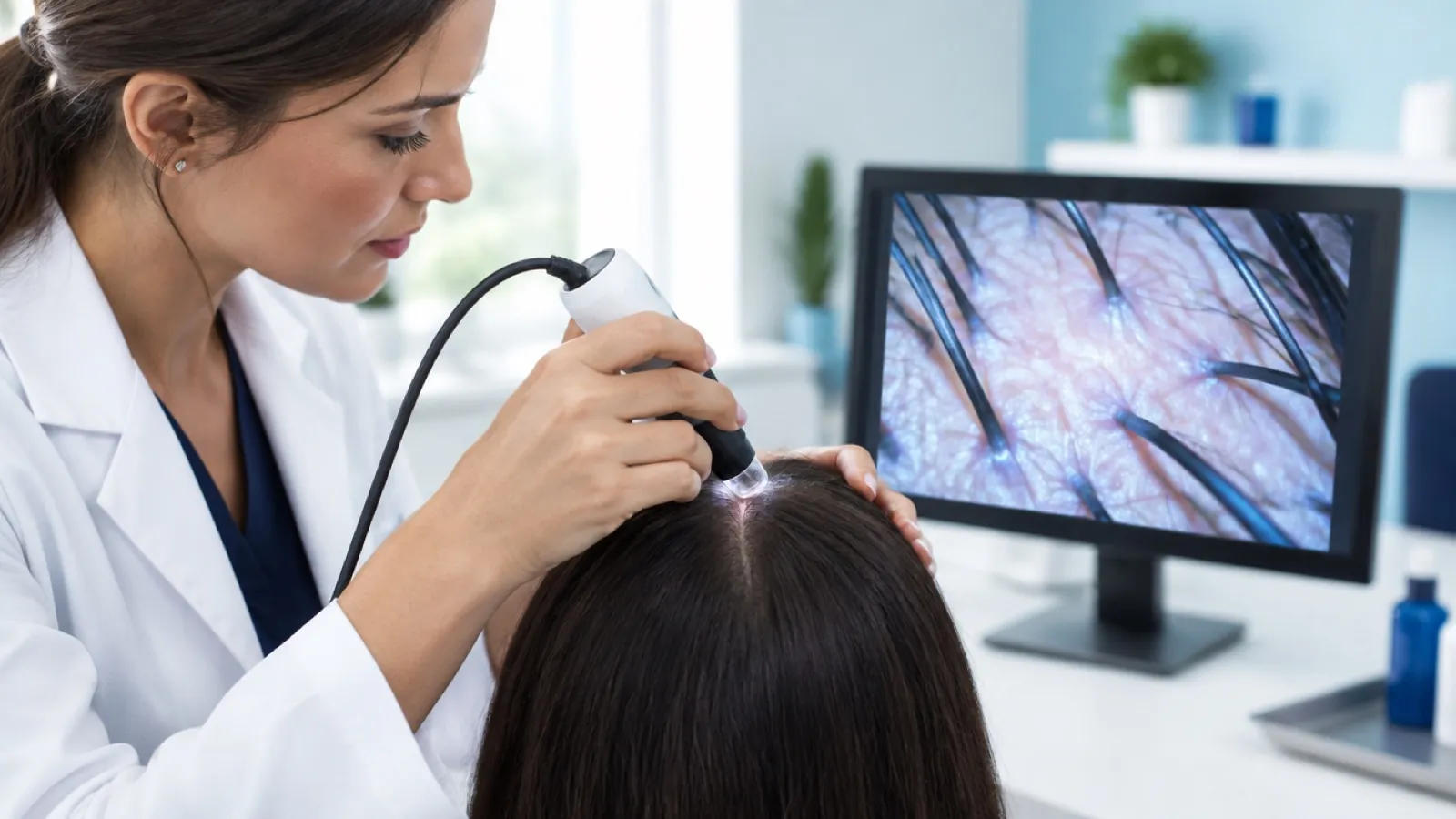
What Is Trichoscopy? Scalp Dermoscopy Explained
What is trichoscopy? A plain guide to scalp dermoscopy: how a trichoscope works, what it shows, who uses it, and how it compares with a biopsy or pull test.
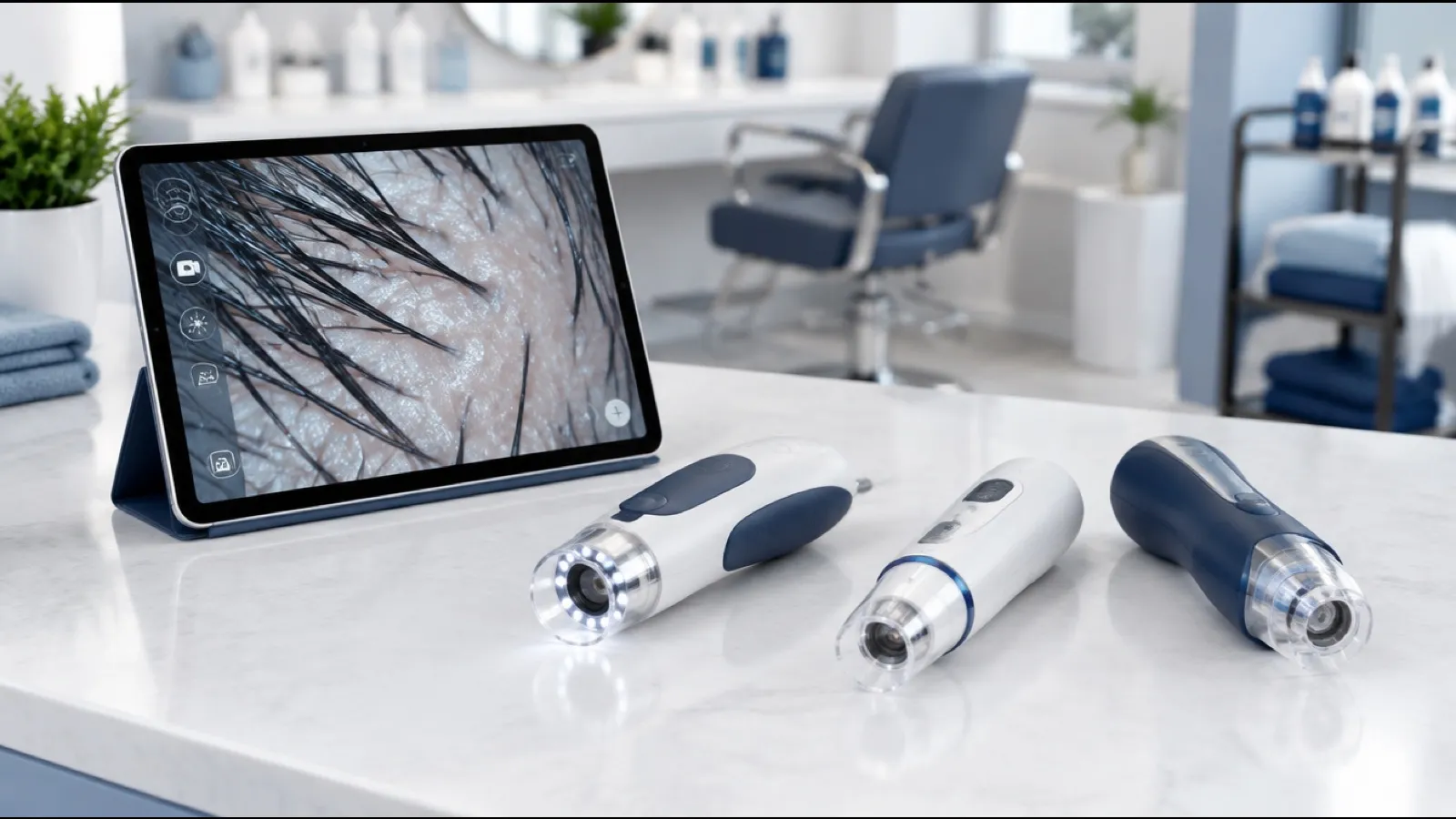
Best Scalp Camera for Salon Use: What to Compare First
The best scalp camera for salon use is the one that gives clear, repeatable images. Compare magnification, lighting, storage, display and tip hygiene.

Hair and Scalp Consultation: Full Guide and Intake Form
A hair and scalp consultation in six stages, with a ready-to-copy intake question list, an observation checklist, summary wording and a follow-up schedule.