

Traction Alopecia Early Signs: A Guide for Stylists
Traction alopecia early signs every braider, loctitian and stylist should know, plus lower-tension practices, client scripts and when to refer.
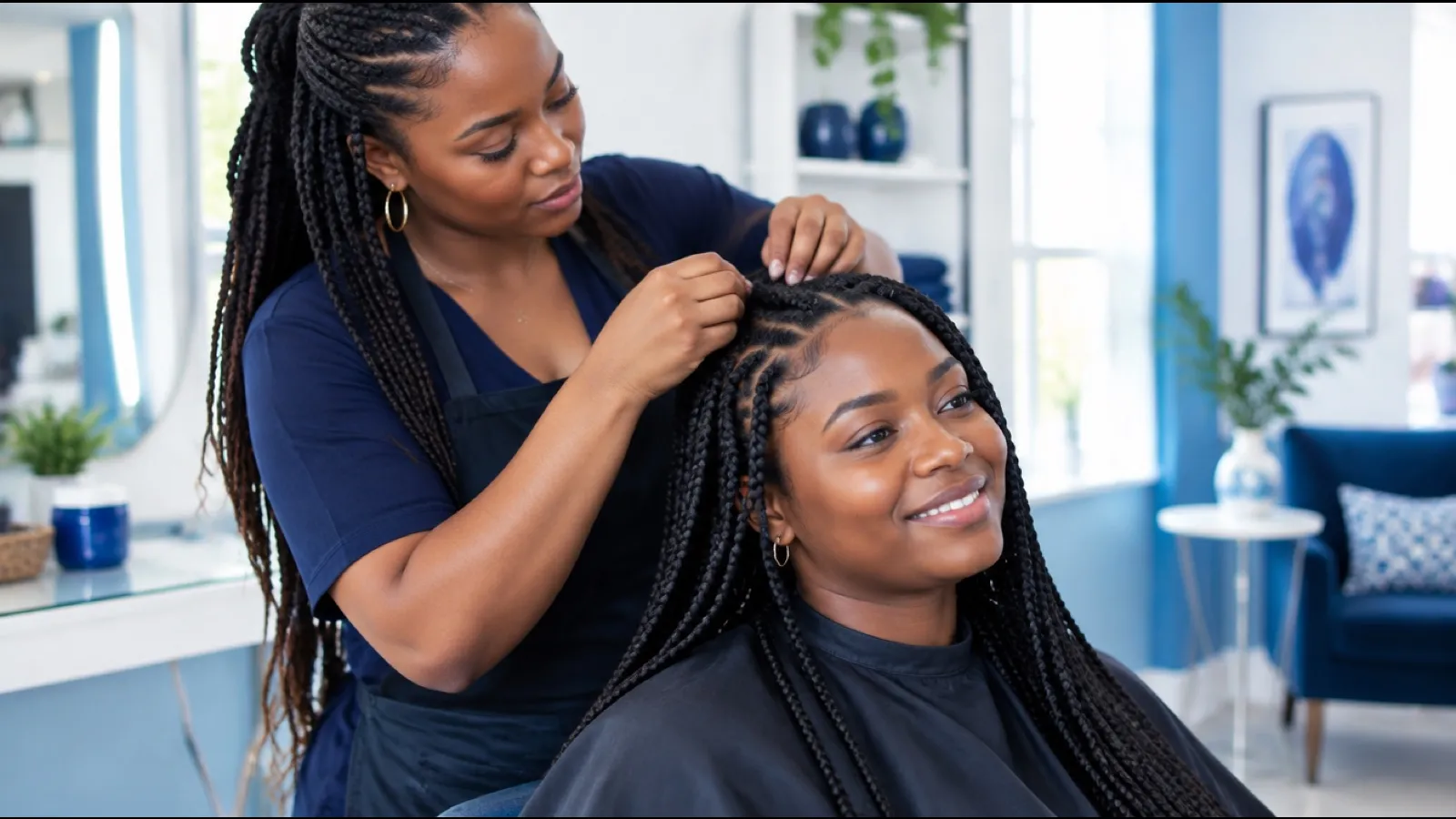
Traction alopecia early signs are visible at the hairline long before a client notices them: broken hairs around the forehead, a hairline that sits further back than it used to, and thin patches where the hair is pulled tightest. Those three signs come from the American Academy of Dermatology (AAD). The braider, loctitian or stylist is usually the first person in a position to see them.
That matters because timing decides the outcome. The AAD says traction alopecia can become permanent the longer it goes untreated. This guide covers what to look for, how to reduce tension without giving up the styles your clients love, what to say, and when to refer.
What is traction alopecia?
Traction alopecia is hair loss caused by repeated pulling on the hair. The AAD explains that styles which constantly pull, such as a sleek ponytail, cornrows or a tight updo, can damage hair over time and lead to hair loss, and that the hairline is one of the first places it shows.
Anyone who wears tight styles or puts repeated stress on the scalp can develop it. The AAD names ballet dancers, military personnel and anyone required to pull their hair back for work as being at higher risk. It also notes that some people experience it more often because tight styles are common in their culture or profession, and that this is especially true for girls and women of African descent.
The AAD lists these styles as possible causes when they are too tight:
- Cornrows
- Locs
- Tightly braided hair
- Buns, ponytails and updos that are tightly pulled
- Hair extensions or weaves, especially on relaxed hair
- Styles that require rollers worn to bed most of the time
None of this is about a client doing something wrong. These styles carry culture, identity, workplace requirements and real convenience. The issue is mechanical: how much pull, on how little hair, for how long.
What are the early signs of traction alopecia?
The AAD lists three early signs: broken hairs around the forehead, a receding hairline, and patches of hair loss where the hair is pulled tightly. It also names four warning signs that a style or product could cause hair loss and should be changed immediately: pain, stinging, crusts, and tenting of the scalp.
A chair-side checklist
Check these at every takedown and before every install. The AAD advises people who wear tight styles to look for early signs every month. You can do it for them.
| What you see or hear | Where | AAD classification |
|---|---|---|
| Short, broken hairs | Around the forehead and edges | Early sign of hair loss |
| Hairline sitting further back than in earlier photos | Front hairline and temples | Early sign of hair loss |
| Thin patches | Wherever the style pulls tightest | Early sign of hair loss |
| "It hurts" or "it's sore" | Anywhere under tension | Change the style immediately |
| Stinging | Scalp | Change the style immediately |
| Crusts | Scalp | Change the style immediately |
| Tenting: scalp lifted like a tent at the base | Base of braids, locs or ponytail | Change the style immediately |
| Shiny, smooth skin with no hair | Long-standing areas of pull | Advanced. The AAD says hair cannot grow back at this stage |
The AAD puts it plainly: if a hairstyle feels painful, the style is too tight.
Can braids cause permanent hair loss?
They can, if they are tight and the pulling continues. The AAD says that when pulling continues, most people eventually notice their hair stops growing, and shiny, bald skin appears where hair once grew. At that stage, the AAD states, the hair cannot grow back. Braids installed with low tension are a different matter.
Traction alopecia from braids is about the install and the wear schedule, not the style category. The AAD also notes that for people of African descent, the shape of the hair follicle makes hair more likely to be damaged by rough or tight styling. That is a reason for skilled, gentle technique. It is not a reason to avoid braiding.
Can traction alopecia be reversed?
Sometimes, and the earlier it is addressed the better, but a stylist cannot tell a client which side of the line they are on. The AAD says the best way to halt it is to see a board-certified dermatologist when symptoms start, because traction alopecia can be permanent the longer it goes untreated.
According to the AAD, a person diagnosed with traction alopecia should stop wearing tight styles that stress the follicle, and the dermatologist can recommend lower-risk alternatives such as looser braids. If changing styling habits does not help, the AAD says a dermatologist may prescribe medicine to help regrow hair, and for serious cases may recommend a hair restoration procedure.
So the honest answer for a client is: "It may come back if we take the tension off now. It may not if we keep pulling. A dermatologist can tell you where you stand." Never promise regrowth.
How can braiders and loctitians lower tension in protective styles?
Protective styles protect only when tension is low. The AAD's guidance is specific: loosen braids, especially around the hairline, choose thicker braids and locs, keep them short because longer hair is heavier and pulls more, and wear braids for no longer than 6 to 8 weeks.
Turn that guidance into shop practice:
- Ask during the install. "Is that tight anywhere?" Ask at the hairline, the nape and the crown. Redo any section that hurts.
- Go easy on the perimeter. The AAD singles out the hairline. Use larger sections and less grip on the edges, or leave fragile edges out.
- Match weight to the hair. Thicker and shorter braids and locs pull less, per the AAD. Be cautious with added length and heavy extensions on fine or thinning areas.
- Set a wear limit. The AAD says no longer than 6 to 8 weeks for braids. Book the takedown when you book the install.
- Rotate. The AAD recommends switching styles regularly, for example loose braids or a natural style for a few months after cornrows, and giving hair a break from all styling when possible.
- Handle weaves carefully. The AAD advises wearing weaves for short periods, removing them immediately if they cause pain or irritation, choosing sewn-in over bonding glue, and making sure the cornrows underneath are not tight.
- Advise on coverings. The AAD says rubbing from a hat or scarf can contribute. It suggests pulling hair back loosely underneath and notes silk or satin is gentler.
A scalp scope helps you show a client what you are seeing at the hairline. Our guide to scalp analysis for hairstylists covers how to build that into a consultation.
What should you say to the client?
Say what you see, say it kindly, and offer a next step. Clients often feel embarrassed or blamed when thinning edges come up, and many have worn the same style since childhood. The AAD notes that styling habits that lead to hair loss often begin at a young age. Lead with observation and options.
Scripts that work:
- Opening: "I'm noticing some shorter, broken hairs along your hairline on this side. Have you noticed that too?"
- No blame: "This is really common with styles that pull, and it isn't about anything you did wrong. It's about tension over time."
- The option: "I'd like to go a little larger and looser around your edges today. The style will still look clean."
- The referral: "I can't tell you what's causing it. A board-certified dermatologist can, and the AAD says it's never too early to go. I can write down what I'm seeing for you to take."
Document with dated photos if the client consents.
How is CCCA different, and what are CCCA early signs?
Central centrifugal cicatricial alopecia (CCCA) is a different condition. The AAD describes it as a type of alopecia that can cause permanent hair loss, often beginning in the center or crown of the scalp as a small round patch that grows outward. It is a scarring condition and needs a dermatologist.
The AAD says CCCA is more commonly seen in Black women, though it also develops in men and in people of all races, that it usually begins during middle age, and that it runs in families. Hair loss in Black women should never be assumed to be traction.
CCCA early signs described by the AAD:
- Noticeable hair loss at the center or crown of the scalp, spreading outward in a circular pattern
- Hair breakage, leaving some hairs shorter than others
- A scalp that feels scaly, bumpy or crusty, sometimes before hair loss is noticeable
- Itching, pain, tenderness, burning, stinging or a pins-and-needles feeling, although not everyone has symptoms
- In scarred areas, a shiny and smooth scalp
Two points matter for professionals. First, the AAD says research indicates hairstyling practices are not the cause of CCCA, contrary to what was previously believed, so do not tell a client her styles caused crown thinning. Second, the AAD says that once a follicle is destroyed it is replaced by scar tissue, and that starting treatment early can prevent CCCA from spreading and causing more permanent loss. Crown thinning with tenderness or burning is an immediate referral.
When should you refer to a dermatologist?
Refer at the first sign. The AAD says that if you have hair loss, it is never too early to see a board-certified dermatologist, and that hair loss has many possible causes beyond hairstyle. Diagnosis belongs to the physician.
Refer when you see:
- Any of the three AAD early signs at the hairline
- Thinning that does not improve after the tension is removed
- Crusts, bumps, sores, or a tender, burning or stinging scalp
- Shiny, smooth patches
- Thinning at the crown or center of the scalp
- Any hair loss in a child
Our article on when to refer a client to a dermatologist explains how to make the handoff, and hair shedding vs hair loss helps you separate hairline thinning from general shedding.
Spotting traction alopecia early signs is one of the most valuable things a braider, loctitian or stylist can do, because the window to act is short and you are the one looking at the hairline. If you want formal training in scalp observation and referral, see the USTI trichology pathway or browse all courses.
New to the field? Start with What is trichology? or look up a term in the trichology glossary.
Sources
- American Academy of Dermatology, Hairstyles that pull can lead to hair loss
- American Academy of Dermatology, Central centrifugal cicatricial alopecia (CCCA): Overview
- American Academy of Dermatology, CCCA: Signs and symptoms
- American Academy of Dermatology, Do you have hair loss or hair shedding?
Frequently asked questions
What are the early signs of traction alopecia?
The American Academy of Dermatology lists broken hairs around the forehead, a receding hairline, and patches of hair loss where the hair is pulled tightly. It also names pain, stinging, crusts and tenting of the scalp as signs that a hairstyle could cause hair loss and should be changed immediately.
Can braids cause permanent hair loss?
Braids themselves are not the problem. Tension is. The AAD says that when braids, cornrows, locs or extensions are too tight, they can cause traction alopecia, and that if the pulling continues the hair eventually stops growing and cannot grow back. Looser, thicker, shorter braids worn for limited periods lower the risk.
Can traction alopecia be reversed?
It depends on how early it is caught, and only a dermatologist can assess that. The AAD says traction alopecia can be permanent the longer it goes untreated, and that once the skin is shiny and bald the hair cannot grow back. It advises stopping tight styles and seeing a board-certified dermatologist when symptoms start.
How long should braids be left in?
The AAD recommends wearing braids for no longer than 6 to 8 weeks. It also advises loosening braids, especially around the hairline, choosing thicker braids and locs, keeping them short because longer hair is heavier and pulls more, and switching styles regularly so the hair can recover.
Are protective styles bad for hair?
No. A style protects only when it is low tension. The AAD notes that cornrows, locs, braids, weaves and extensions can lead to traction alopecia when they are too tight. The same styles installed loosely, kept lighter and shorter, and rotated with rest periods are far gentler on the hairline.
What is the difference between traction alopecia and CCCA?
Traction alopecia follows the line of pull, usually the hairline. Central centrifugal cicatricial alopecia, or CCCA, is a scarring hair loss that the AAD says often begins in the center or crown of the scalp and spreads outward. The AAD says research indicates hairstyling is not the cause of CCCA. Both need a dermatologist.
What should a braider do if a client has thinning edges?
Describe what you see without blame, lower the tension or leave the fragile area out of the style, document it with a photo if the client agrees, and recommend a board-certified dermatologist. A stylist cannot diagnose the cause. The AAD says it is never too early to see a dermatologist about hair loss.
This article is educational and is not medical advice. USTI teaches professionals to recognize, support and refer.
Turn this knowledge into a certification.
Learn hair and scalp science with USTI educators, from your first course to clinical training.
Explore trichology coursesRelated articles

Alopecia Areata: A Stylist's Guide to Bald Patches
Alopecia areata explained for stylists: the signs you may spot first, what to say when you find a bald patch on a client, cosmetic support and when to refer.
CCCA Hair Loss: Early Signs Every Stylist Should Know
CCCA hair loss often starts quietly at the crown. Learn the early signs a stylist may notice, how it differs from traction alopecia, and when to refer.
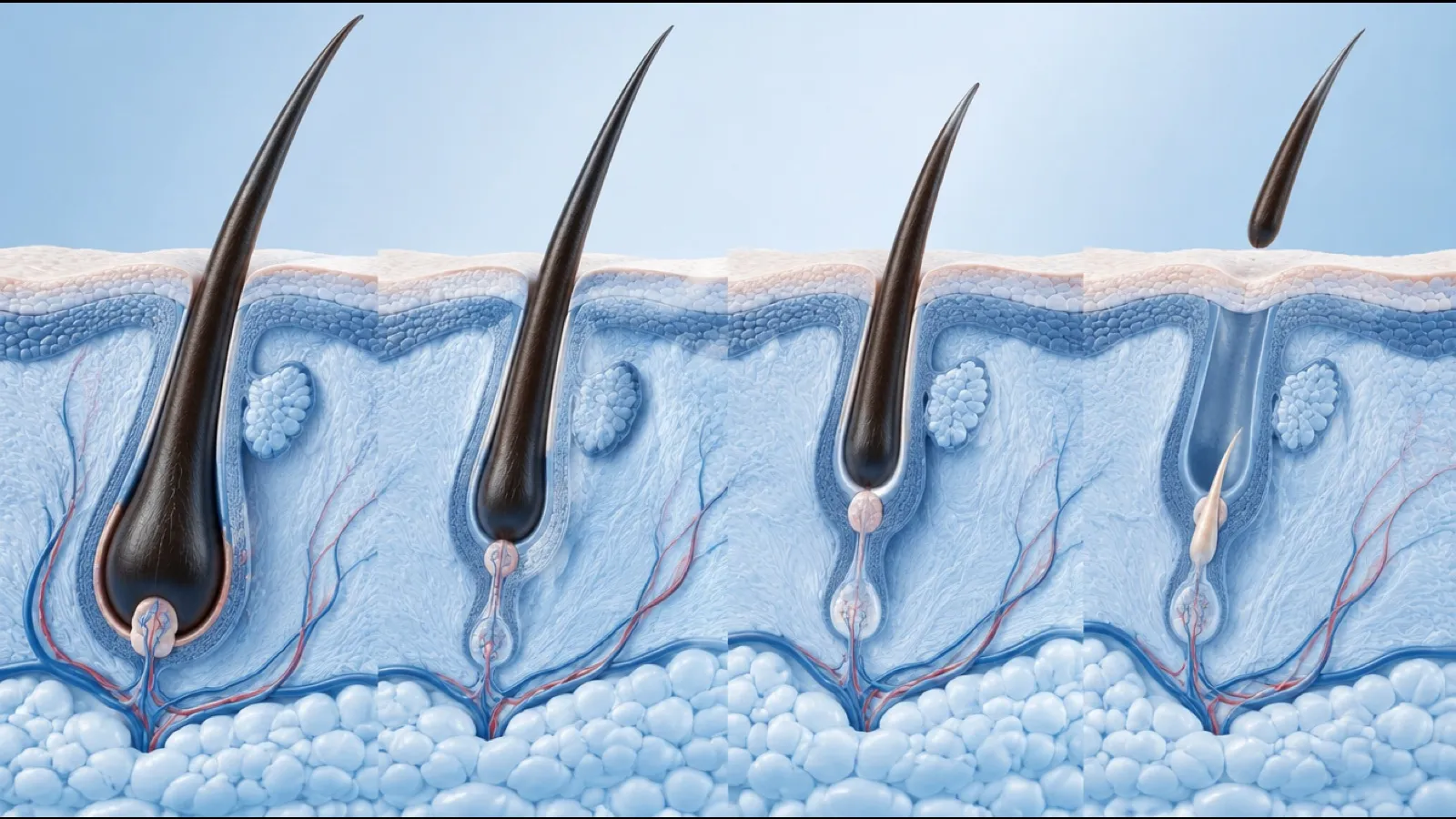
Hair Growth Cycle Stages: Anagen, Catagen, Telogen, Exogen
The hair growth cycle stages explained for stylists: anagen, catagen, telogen and exogen, how long each lasts by source and what the cycle means at the chair.