

Scalp pH Explained: Hair, Shampoo and the Acid Mantle
Scalp pH explained with sources: the pH of the scalp and hair shaft, what shampoo pH does to the cuticle, the acid mantle, chemical services and common myths.
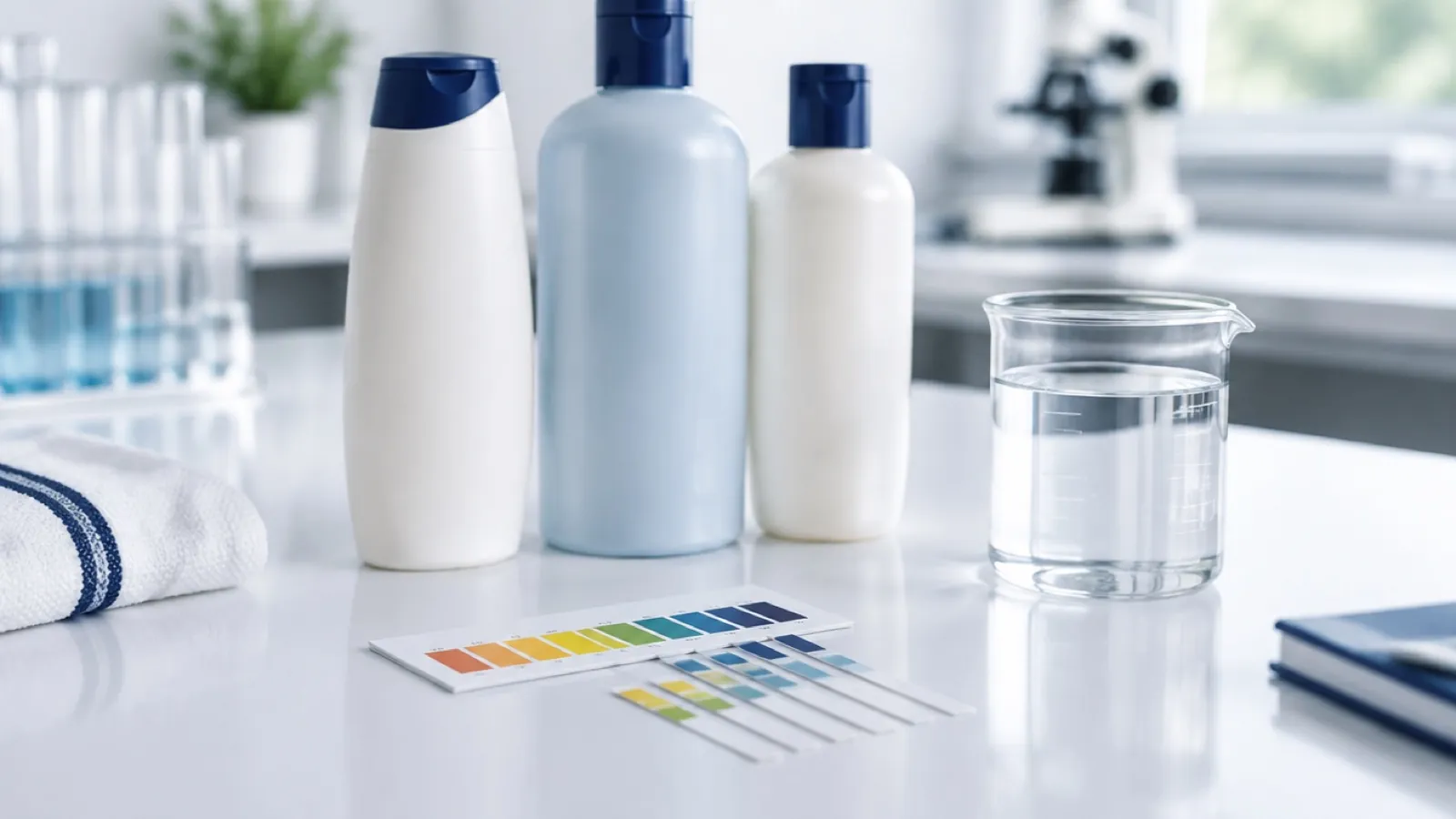
Part of the USTI scalp health guide. Start with What is scalp health?
Scalp pH is around 5.5, which is mildly acidic, according to a 2014 paper in the International Journal of Trichology. The same paper puts the pH of the hair shaft at 3.67. Those two numbers explain why the pH of a shampoo, color or relaxer changes how hair and scalp behave.
pH comes up constantly in product marketing and rarely with a source attached. This guide gives the published numbers, explains what pH does to the cuticle and the scalp surface, and separates what the research shows from what is assumed. It is part of our series on what scalp health is and how professionals can support it.
What is pH, and why does it matter for hair and scalp?
pH is a measure of how acidic or basic a water-based solution is. The US Geological Survey explains that the scale runs from 0 to 14, with 7 being neutral. Values below 7 are acidic and values above 7 are basic, also called alkaline. Each whole number is a 10-fold change, so a product at pH 8 is ten times more alkaline than one at pH 7.
That matters because both the scalp and the hair fiber sit on the acidic side of the scale. Anything applied to them that is well above their own pH changes their surface chemistry for a time.
What is the pH of the scalp and hair?
Gavazzoni Dias and colleagues state that "the pH of the scalp, however, is around 5.5" and that "the hair shaft pH is 3.67." The hair fiber is noticeably more acidic than the skin it grows from.
The table collects the pH values from the sources used in this article. Where a number comes from a site other than the scalp, the table says so.
| What was measured | pH value | Source |
|---|---|---|
| Scalp | Around 5.5 | Gavazzoni Dias et al., International Journal of Trichology, 2014 |
| Hair shaft | 3.67 | Gavazzoni Dias et al., 2014 |
| Skin surface (forearm, 330 people) | Estimated natural average of 4.7 | Lambers et al., International Journal of Cosmetic Science, 2006 |
| Normal adult outer skin layer (stratum corneum) | Reported in the 4 to 6 range | Panther and Jacob, Journal of Clinical Medicine, 2015 |
| Neutral point of the pH scale | 7 | US Geological Survey |
| Drinking water, US EPA secondary guideline | 6.5 to 8.5 | US Environmental Protection Agency |
| Tap water in Europe | Generally around 8.0 | Lambers et al., 2006 |
| 123 shampoos tested in one study | 3.5 to 9.0 | Gavazzoni Dias et al., 2014 |
| Alkaline hair straighteners (relaxers) | 12 to above 13 | Gavazzoni Dias, International Journal of Trichology, 2015 |
Two notes on reading it. The Lambers figure was measured on the forearm, not the scalp, so it describes skin in general. And the EPA range is a non-enforceable guideline for public water systems, not a measurement of any particular salon's water.
What is the acid mantle of the scalp?
The acid mantle is the name for the skin's mildly acidic surface. Panther and Jacob, writing in the Journal of Clinical Medicine, state that the normal adult stratum corneum is decidedly acidic, with values reported in the 4 to 6 range, and that acidification is "necessary for antibacterial activity, barrier function, and maturation and structural integrity of the stratum corneum."
Two findings from the research are useful to professionals:
- Acidity and resident microbes. Lambers and colleagues report that an acid skin pH of 4 to 4.5 keeps the resident bacterial flora attached to the skin, whereas an alkaline pH of 8 to 9 promotes dispersal from the skin. See the scalp microbiome explained for more.
- Cleansing shifts skin pH for a while. Lambers and colleagues note that plain tap water, at a pH generally around 8.0 in Europe, will increase skin pH for up to 6 hours after application. Panther and Jacob cite research showing that hand washing with alkaline soap can increase skin pH by 3 units, an effect that persisted for 90 minutes.
These studies were not carried out on the scalp, so they show how skin in general responds. They are still the reason a mildly acidic approach to scalp cleansing is widely taught.
Does shampoo pH matter?
The published evidence suggests it does, for both the fiber and the scalp. Gavazzoni Dias and colleagues set out the reasoning and then measured real products.
What does pH do to the hair cuticle?
The hair fiber carries an electrical charge that depends on the pH around it. At 3.67 that charge is at its minimum. As pH rises above that point, the fiber surface becomes more negatively charged. The paper states: "Alkaline pH may increase the negative electrical net charge of the hair fiber surface and, therefore, increase the friction between the fibers. This may lead to cuticle damage and fiber breakage."
In salon terms, more negative charge means more static, more flyaways and more friction when hair is combed. The authors add that a lower shampoo pH may cause less frizz because it generates less negative static electricity on the fiber surface.
A separate 2015 review by Gavazzoni Dias in the same journal describes the structural side: "Hair is sensitive to pH value changes and alkaline solutions swell the fibers and open the cuticle scales."
What about the scalp?
The 2014 paper states that "a pH higher than 5.5 may cause irritation of the scalp." The wording is cautious, and it is an expert statement, not the result of a clinical trial in the paper. A client with persistent itch, burning or flaking needs more than a product change. See itchy scalp causes and refer where appropriate.
What pH are shampoos in practice?
Gavazzoni Dias and colleagues measured 123 shampoos, including international brands, in Brazil. The pH values ranged from 3.5 to 9.0. Overall, 38.21% had a pH of 5.5 or lower and 61.78% were above 5.5.
By category, the share with a pH of 5.5 or lower was:
- Professional salon shampoos: 75%
- Dermatological shampoos: 42.10%
- Commercial (retail) shampoos: 34.37%
- Anti-dandruff shampoos: 19.23%
- Children's shampoos: none. All were above 5.5.
The authors conclude that there is no standardized value for the final pH of shampoo, that the pH was not stated on the labels, and that it is important to reveal the pH on the label. They also say plainly that "studies are needed to establish the best pH range."
What does "pH balanced shampoo" mean?
There is no single definition. The study above found no standardized pH value for shampoo and no pH figures on the labels examined. "pH balanced" generally signals a mildly acidic formula, but the phrase alone does not give you a number.
If the pH of a product matters for a client, you have three options:
- Ask the manufacturer or check the technical data sheet.
- Test the product with pH strips or a pH meter.
- Read the rest of the formula. pH is one factor among several. Our guides to reading hair product ingredient labels and sulfates and silicones in hair products cover the others.
How do chemical services change hair and scalp pH?
Many chemical services work because they are alkaline. Gavazzoni Dias (2015) explains that the high pH of these products, given as 9.0 to 14.0, swells the hair and opens the cuticle scales so the active ingredients can reach the inside of the fiber.
What the review says about specific services:
- Relaxers and alkaline straighteners. These contain 1% to 10% sodium hydroxide, lithium hydroxide, calcium hydroxide or a combination such as guanidine carbonate. The review states that their pH "varies from 12 to above 13."
- Permanent color. Permanent dyes use ammonia to increase the pH. Some ammonia-free products use ethanolamine for the same purpose.
- Thioglycolate services. Ammonium thioglycolate can cause extreme swelling of the fiber and must afterward be neutralized with a hydrogen peroxide solution.
The scalp is exposed to the same chemistry. The review warns that chemical relaxers should not be applied to the scalp because they can cause skin burns, and describes applying petrolatum along the hairline and on the ears before a relaxer to prevent alkaline burns.
The practical principle that follows is simple: a highly alkaline service should be followed by the manufacturer's full rinsing, neutralizing and conditioning steps, and should not be performed on a scalp that is already sore or broken.
What should professionals do with this information?
Use pH as one input when you choose products and plan services, alongside the client's scalp type, hair condition and history.
- Know your backbar. Find out the pH of the shampoos and conditioners you use most. Measure them if the manufacturer does not publish it.
- Follow an alkaline step with an acidic one. The 2014 paper recommends that after a shampoo with a pH above 5.5, a low pH conditioner should be applied so that electrostatic forces are neutralized, frizz is reduced and "cuticle scales may be sealed."
- Protect the scalp during chemical services. Follow manufacturer directions on base protection, timing, rinsing and neutralizing every time.
- Look before you apply. A scalp check before any chemical service is part of a proper hair and scalp consultation. Reschedule if the scalp is irritated.
- Match the routine to the scalp. Oily, dry and sensitive scalps need different approaches. See scalp types explained and how to improve scalp health.
- Do not promise a medical result. pH-appropriate products are part of good cosmetic care. They are not a remedy for scalp disease. Persistent redness, scale or soreness calls for a referral. See when to refer a client to a dermatologist.
What are the common myths about scalp pH?
Myth: Children's shampoos are the lowest in pH. In the Gavazzoni Dias study, every children's shampoo tested had a pH above 5.5.
Myth: A professional shampoo always has a low pH. In the same study, 75% of professional products were at pH 5.5 or lower. A quarter were not.
Myth: Anti-dandruff shampoos are formulated at scalp pH. Of the 26 anti-dandruff shampoos in the study, 80.77% were above 5.5.
Myth: Water is neutral, so it has no effect. Neutral is pH 7, which is above the hair shaft's 3.67 and the scalp's 5.5. Lambers and colleagues report that tap water application alone raises skin pH for up to 6 hours.
Myth: "pH balanced" on a label tells you the pH. The study found no standardized value for shampoo pH and no pH stated on the labels.
Myth: The ideal shampoo pH has been settled. The authors of the 2014 paper recommend 5.5 or lower and also write that "studies are needed to establish the best pH range." The evidence is useful and still developing.
Where does pH fit in scalp health training?
pH is a small topic that connects several large ones: the skin barrier, the cuticle, product formulation and chemical services. The USTI Scalp Health & Hair Care Science Certification Program covers these in its modules on scalp and hair anatomy, ingredient science, and chemical services and their effect on scalp health.
The short version: the scalp is mildly acidic, the hair shaft more so, and products far above those values change how both behave. Know the numbers, know your products, and attribute what you tell clients to a source.
New to the field? Start with What is trichology? or look up a term in the trichology glossary.
Sources
- Gavazzoni Dias MFR, de Almeida AM, Cecato PMR, Adriano AR, Pichler J. The Shampoo pH can Affect the Hair: Myth or Reality? International Journal of Trichology. 2014;6(3):95-99
- Gavazzoni Dias MFR. Hair Cosmetics: An Overview. International Journal of Trichology. 2015;7(1):2-15
- Lambers H, Piessens S, Bloem A, Pronk H, Finkel P. Natural skin surface pH is on average below 5, which is beneficial for its resident flora. International Journal of Cosmetic Science. 2006;28(5):359-370
- Panther DJ, Jacob SE. The Importance of Acidification in Atopic Eczema: An Underexplored Avenue for Treatment. Journal of Clinical Medicine. 2015
- US Geological Survey: pH and Water
- US Environmental Protection Agency: Secondary Drinking Water Standards: Guidance for Nuisance Chemicals
Frequently asked questions
What is the pH of the scalp?
A 2014 paper by Gavazzoni Dias and colleagues in the International Journal of Trichology states that the pH of the scalp is around 5.5. That is mildly acidic. A 2015 review in the Journal of Clinical Medicine reports that the normal adult outer skin layer is acidic, with values reported in the 4 to 6 range.
What is the pH of hair?
Gavazzoni Dias and colleagues state that the hair shaft pH is 3.67, which is more acidic than the scalp. The paper describes 3.67 as the point at which the hair fiber carries the least electrical charge. Above that point, the fiber surface becomes more negatively charged, which increases friction between fibers.
Does shampoo pH matter?
The published evidence suggests it does. Gavazzoni Dias and colleagues report that alkaline pH may increase the negative charge on the hair fiber surface and the friction between fibers, which may lead to cuticle damage and breakage. They also state that a pH higher than 5.5 may cause irritation of the scalp, and that more studies are needed.
What does pH balanced shampoo mean?
The phrase has no single fixed value behind it. Gavazzoni Dias and colleagues found there is no standardized value for the final pH of shampoo and that the pH was not stated on the labels they examined. In practice, the term usually signals a mildly acidic product. The only way to know the number is to measure it or ask the manufacturer.
What is the acid mantle of the scalp?
The acid mantle is the mildly acidic surface of the skin, including the scalp. A 2015 review in the Journal of Clinical Medicine says acidification is necessary for antibacterial activity, barrier function and the structural integrity of the outer skin layer. A 2006 study found that acidic skin pH keeps resident bacteria attached to the skin.
Can alkaline shampoo damage hair?
According to Gavazzoni Dias and colleagues, alkaline pH may increase the negative electrical charge on the hair fiber surface, which increases friction between fibers and may lead to cuticle damage and fiber breakage. They recommend that a low pH conditioner follow any shampoo with a pH above 5.5, to neutralize electrostatic forces and help seal the cuticle scales.
Are professional shampoos lower in pH than store shampoos?
In one study they were, on average. Gavazzoni Dias and colleagues tested 123 shampoos and found that 75% of professional salon products had a pH of 5.5 or lower, compared with 34.37% of commercial products. That still leaves a quarter of the professional products tested above 5.5, so category alone does not tell you the pH.
This article is educational and is not medical advice. USTI teaches professionals to recognize, support and refer.
Become the scalp health expert in your chair.
USTI's scalp health and haircare certification program covers eleven modules, online at your own pace or live virtual, with 10 CE credits.
See the scalp health certificationRelated articles
How to Improve Scalp Health: A Step by Step Routine
How to improve scalp health in nine sourced steps: how often to wash, how to shampoo, managing flakes, sun care, and when a scalp problem needs a physician.
Itchy Scalp Causes: 10 Reasons and When to Refer
Itchy scalp causes explained with sources: the AAD's ten reasons, itch without dandruff, itch with hair loss, itch after coloring, and what a stylist can do.
Oily Scalp: Causes, Care and When to Refer
Oily scalp explained with sources: how sebum is made, what drives oil production, how often to wash oily hair, care approaches, and when to refer a client.