

Itchy Scalp Causes: 10 Reasons and When to Refer
Itchy scalp causes explained with sources: the AAD's ten reasons, itch without dandruff, itch with hair loss, itch after coloring, and what a stylist can do.
Part of the USTI scalp health guide. Start with What is scalp health?
Itchy scalp causes range from dandruff and product reactions to head lice, psoriasis and nerve problems. The American Academy of Dermatology (AAD) lists ten reasons a scalp may itch. Most involve a visible change on the scalp, some do not, and telling them apart is a job for a physician.
This guide sets out those causes with their sources, for stylists, barbers and other beauty professionals as well as clients asking "why is my scalp itchy?" It sits within the USTI scalp cluster that starts with what is scalp health. It covers itch with no dandruff, itchy scalp and hair loss, itch after coloring, what a stylist can do within cosmetic scope, and when to refer.
How common is an itchy scalp?
An itchy scalp is common. A 2019 review in BioMed Research International by Rattanakaemakorn and Suchonwanit reports that the prevalence of scalp pruritus, the medical term for scalp itch, ranged from 13 to 45% across earlier studies.
The same review explains why the scalp is prone to itch. Scalp skin has abundant sensory nerves and blood vessels, contains more hair follicles and sebaceous glands than other skin, and carries its own normal population of microorganisms. That population is described in the scalp microbiome explained.
The authors group causes into four categories: dermatologic, neuropathic (nerve related), systemic and psychogenic.
What are the most common itchy scalp causes?
The AAD's patient guidance names ten reasons for scalp itch. The table lists each cause, what may be noticed according to the AAD and DermNet, and who handles it.
| Cause | What may be noticed | Who handles it |
|---|---|---|
| Dandruff | Dry, itchy scalp with flakes on the hair or clothing (AAD) | Self care with dandruff shampoo per the AAD. A dermatologist if it does not go away or is severe |
| Reaction to a hair care product | Itchy, dry, flaky scalp, or an itchy rash. PPD in hair dye is a known cause (AAD) | Stop the product. A dermatologist if the trigger is hard to identify |
| Hives | Red, raised, very itchy bumps that come and go within hours (AAD) | Often clears without help. A physician if long lasting |
| Head lice | Itch is the most common symptom. Lice favour the nape of the neck and behind the ears (AAD, DermNet) | Lice treatment at home per the AAD. No salon service until cleared |
| Scabies | Itch that can be so intense it keeps the person awake (AAD) | Physician. The AAD says prescription treatment is required |
| Scalp ringworm (tinea capitis) | Red, intensely itchy rash, possibly with pus-filled bumps and hair loss (AAD) | Physician. Prescription medication is needed |
| Scalp psoriasis | Reddish patches, flaking and silvery-white scale (AAD) | Physician or dermatologist for diagnosis and a plan |
| Atopic dermatitis | Redness and scale. The scalp may burn (AAD) | Board-certified dermatologist |
| Nerve problem (neuropathy) | Intensely itchy scalp without signs of a rash (AAD) | Board-certified dermatologist |
| Skin cancer | A spot on the scalp that may itch (AAD) | Board-certified dermatologist |
A few notes on the most frequent ones follow.
Dandruff and seborrheic dermatitis
The BioMed Research International review calls seborrheic dermatitis "the most common disorder presented with scalp pruritus." The AAD describes dandruff as possibly the mildest form of the same condition, and DermNet puts seborrhoeic dermatitis at 3% to 12% of the population. Cleveland Clinic dermatologist Melissa Piliang, MD, explains that yeast normally lives on the scalp, and that the problem arises when there is too much of it.
The AAD says the itch of seborrheic dermatitis is usually mild but can be intense, especially on the scalp. For how to tell flake types apart by observation, see dandruff vs dry scalp vs buildup and the seborrheic dermatitis guide for stylists.
Scalp psoriasis
The AAD states that about 50% of the people who have plaque psoriasis experience a flare-up on the scalp at some point, and it lists itching as one of the most common symptoms of scalp psoriasis. The review cited above reports that 58% of patients with psoriasis report scalp itch. More detail is in the scalp psoriasis guide for stylists.
Head lice
DermNet describes head lice as small wingless insects, 2 to 3 mm long, most common in children 4 to 14 years of age, that spread by head to head contact and cannot jump or fly. Nits appear as adherent white grains on the hair shaft. Cleveland Clinic notes that lice are not a sign of poor hygiene.
Scalp ringworm
Scalp ringworm, or tinea capitis, is a contagious fungal infection. DermNet says it predominantly affects preadolescent children and always requires at least 4 weeks of systemic medication, because topical agents cannot reach the root of the hair follicle. This is one cause that no cosmetic product or salon service addresses.
Why is my scalp itchy with no dandruff?
An itchy scalp with no dandruff means the itch has a cause other than visible flaking, or that the scalp change is too subtle to see without magnification. Sources describe several possibilities:
- Nerve related itch. The AAD says a nerve problem can cause an intensely itchy scalp without signs of a rash, and that it may follow shingles, diabetes or scarring from hair loss.
- Sensitive scalp. The BioMed Research International review describes sensitive skin as discomfort such as itching, burning and stinging without predictable clinical signs, and cites studies reporting a 32 to 44% incidence of sensitive scalp. Listed triggers include heat, cold, pollution, emotions, dry air, wet air, water and shampoos.
- An early product reaction. DermNet notes that a mild reaction to hair dye often shows first on the upper eyelids or the rims of the ears, not on the scalp itself.
- Whole body conditions. The review lists chronic kidney disease, cholestatic liver disease and some blood cancers among systemic conditions associated with itch.
A client with persistent itch and a scalp that looks normal should be referred, not reassured. A normal-looking scalp does not rule out a cause.
Can an itchy scalp come with hair loss?
Yes. Itchy scalp and hair loss can appear together, and that combination is one of the clearest reasons to refer. Sources describe three different routes.
Scratching and scale removal. The AAD says that in scalp psoriasis, scratching the scalp or using force to remove scale can cause temporary hair loss, and that hair tends to regrow once the psoriasis clears.
Infection. The AAD lists a scaly bald patch, black dots in a bald area and intense itch among the signs of scalp ringworm.
Scarring hair loss. The BioMed Research International review reports scalp itch in approximately 70% of patients with lichen planopilaris and 67% of patients with frontal fibrosing alopecia. The AAD says many people with untreated central centrifugal cicatricial alopecia (CCCA) report that the scalp burns, stings or itches, and that starting treatment early can prevent more permanent hair loss, because a destroyed follicle is replaced by scar tissue. See CCCA early signs for stylists.
Why does my scalp itch after coloring?
An itchy scalp after coloring may be contact dermatitis, a skin reaction to something the scalp has touched. The AAD says that an itchy scalp with a rash may be a condition called allergic contact dermatitis, and it names para-phenylenediamine (PPD), an ingredient found in black hair dyes, as a known cause. The AAD also notes a simpler explanation for an itchy, dry, flaky scalp: shampoo that has not been fully rinsed out, which can irritate the skin.
DermNet describes how the reaction can look:
- A mild reaction usually presents as an itchy dry rash on the upper eyelids or the rims of the ears.
- A severe reaction causes marked reddening, blistering and swelling of the eyelids, scalp, face and neck.
- After sensitization, reactions occur from a few hours to a few days after contact and become progressively more severe.
DermNet also advises that a person with confirmed PPD allergy should avoid all oxidation type hair dyes and tell their hairdresser.
For the professional, the practical points are:
- Ask about previous reactions to hair color and to black henna tattoos, which DermNet lists as a source of PPD, at every color consultation.
- Follow the manufacturer's patch test instructions and your state board rules.
- If a client reports itching, burning or swelling during a service, stop and rinse.
- Do not repeat the service until the client has seen a physician. Dermatologists can perform patch testing to identify the ingredient.
- Record the product and the reaction.
Ingredient basics are covered in how to read hair product ingredient labels.
What actually gives scalp itch relief?
Scalp itch relief depends on the cause, which is why the AAD's guidance pairs each cause with a different action. In summary, according to the AAD:
- Dandruff: use a dandruff shampoo and scalp treatments, following the label.
- Product reaction: stop using the product that is causing it.
- Head lice: get rid of the lice.
- Scabies and scalp ringworm: prescription treatment from a physician.
- Psoriasis, atopic dermatitis, nerve problems, suspected skin cancer: see a board-certified dermatologist.
For dandruff, the AAD adds detail by hair type. People with fine or naturally straight hair, or an oily scalp, may need to shampoo daily and use a dandruff shampoo twice a week. People with coarse or naturally curly or coily hair can wash when needed and use a dandruff shampoo about once a week, if tolerated.
General habits that support comfort are in how to improve scalp health.
What should a stylist do about a client's itchy scalp?
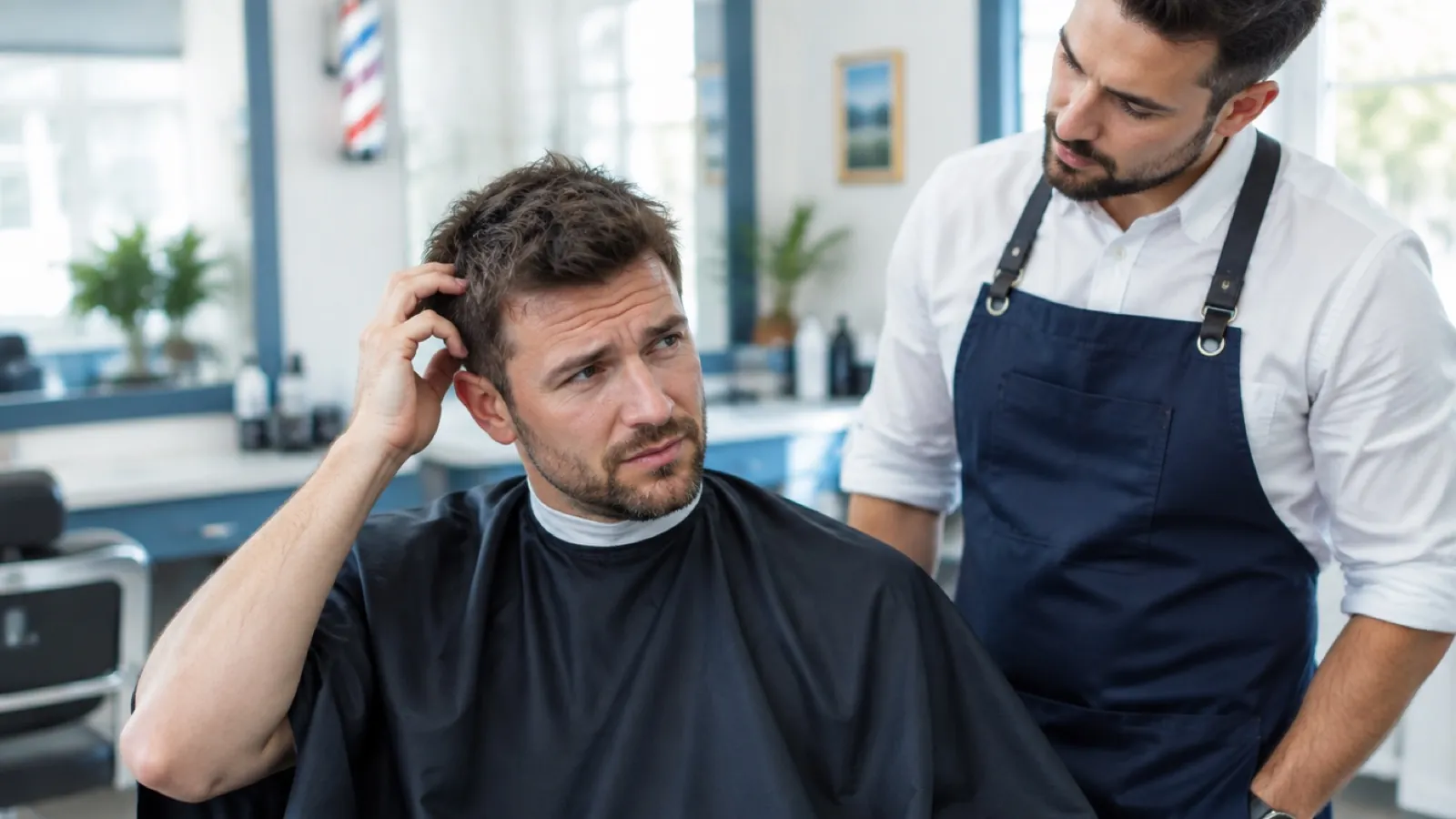
A stylist's role with an itchy scalp is to recognize, support and refer. The stylist does not diagnose the cause and does not treat a disease. Within cosmetic scope, a stylist or barber can:
- Look first. Examine the dry scalp before shampooing, with good light or a scalp scope. The method is in scalp analysis for hairstylists.
- Ask. How long has it itched? Any new shampoo, color, styling product or tight style? Anyone else at home itching?
- Describe, do not label. "I can see some flaking and a pink area at your crown" is within scope. Naming a condition is not.
- Keep the service gentle. Lukewarm water, light pressure, no scratching with nails, a thorough rinse.
- Hold chemical services on a scalp that is broken, weeping, swollen or very inflamed.
- Document and refer. A photo and a short note help the client explain the issue to a physician.
If live lice are seen, stop the service and follow your salon policy and state board rules.
When should an itchy scalp be referred to a dermatologist?
Refer when the itch persists, returns, or comes with anything else. Cleveland Clinic advises seeing a dermatologist if an itchy scalp is not improving, keeps coming back, or is accompanied by hair loss, rash or pain.
Signs that call for a referral:
- Itch with hair loss, thinning or broken hairs
- Thick, silvery, greasy or adherent scale
- Redness, purple or lighter patches, swelling or blistering
- Pustules, open sores or oozing
- Swollen lymph nodes in the neck
- Burning or pain
- Itch that disturbs sleep or does not settle
- A spot that changes, itches or bleeds
More on wording a referral is in when to refer a client to a dermatologist.
Professionals who want structured training in this area can look at USTI's Scalp Health & Hair Care Science Certification Program. Its eleven modules include common scalp diseases, chemical services and their effect on scalp health, and the flaking scalp in depth, all taught within a recognize, support and refer scope.
Itchy scalp causes are many and they overlap in appearance. The professional's task is to notice, keep the client comfortable within cosmetic scope, and refer persistent or complicated itch to a physician.
New to the field? Start with What is trichology? or look up a term in the trichology glossary.
Sources
- American Academy of Dermatology: 10 reasons your scalp itches and how to get relief
- American Academy of Dermatology: How to treat dandruff
- American Academy of Dermatology: Seborrheic dermatitis overview
- American Academy of Dermatology: Seborrheic dermatitis signs and symptoms
- American Academy of Dermatology: Scalp psoriasis symptoms
- American Academy of Dermatology: Scalp psoriasis, 10 ways to reduce hair loss
- American Academy of Dermatology: Head lice signs and symptoms
- American Academy of Dermatology: Ringworm signs and symptoms
- American Academy of Dermatology: Central centrifugal cicatricial alopecia
- American Academy of Dermatology: How to perform a skin self-exam
- DermNet: Itch, pruritus
- DermNet: Seborrhoeic dermatitis
- DermNet: Head lice
- DermNet: Tinea capitis
- DermNet: Allergy to paraphenylenediamine
- Cleveland Clinic: Why is my scalp so itchy? 8 common causes
- Rattanakaemakorn P, Suchonwanit P. Scalp Pruritus: Review of the Pathogenesis, Diagnosis, and Management. BioMed Research International, 2019
Frequently asked questions
What are the most common itchy scalp causes?
The American Academy of Dermatology lists ten: dandruff, a reaction to a hair care product, hives, head lice, scabies, scalp ringworm, scalp psoriasis, atopic dermatitis, a nerve problem and skin cancer. DermNet notes that in adults scalp itch is more likely to be caused by dandruff, seborrhoeic dermatitis or psoriasis, and in children by head lice.
Why is my scalp itchy but I have no dandruff?
Itch without flakes has several possible explanations. The American Academy of Dermatology lists hives, head lice, scabies, reactions to hair products and nerve problems among the reasons a scalp may itch, and says a nerve problem can cause an intensely itchy scalp without signs of a rash. A dermatologist can determine the cause.
Can an itchy scalp cause hair loss?
Itch and hair loss can appear together. The American Academy of Dermatology says scratching in scalp psoriasis can cause temporary hair loss and that scalp ringworm can cause hair loss. A 2019 review reports scalp itch in about 70% of patients with lichen planopilaris, a scarring hair loss. Itch with hair loss should be assessed by a dermatologist.
Why does my scalp itch after coloring my hair?
Itch after coloring may be a reaction to an ingredient in the dye. The American Academy of Dermatology names para-phenylenediamine (PPD), found in black hair dyes, as a known cause of an itchy scalp rash called allergic contact dermatitis. DermNet says reactions can appear a few hours to a few days after contact and may worsen with each exposure.
How do you get scalp itch relief?
Relief depends on the cause. The American Academy of Dermatology suggests dandruff shampoo and scalp treatments for dandruff, and stopping the product for a product reaction. Scabies and scalp ringworm need prescription treatment from a physician. If the cause is unclear or the itch persists, see a board-certified dermatologist.
What should a stylist do about a client's itchy scalp?
A stylist should look at the scalp before the service, ask how long the itch has lasted and what has changed, describe what is visible without naming a disease, keep the service gentle, and suggest a dermatologist if the itch persists or comes with rash, hair loss or pain. A stylist does not diagnose or treat the cause.
When should you see a doctor for an itchy scalp?
Cleveland Clinic advises seeing a dermatologist if an itchy scalp is not improving, keeps returning, or is accompanied by hair loss, rash or pain. Pus, open sores, swollen lymph nodes, bald patches, intense itch that disturbs sleep, or a spot that changes, itches or bleeds should be examined by a physician promptly.
Is an itchy scalp a sign of poor hygiene?
Not necessarily. The American Academy of Dermatology notes that flakes can be related to not shampooing often enough, but many causes of itch have nothing to do with washing. Cleveland Clinic states that head lice are not a sign of poor hygiene. Psoriasis, atopic dermatitis, product allergy and nerve problems are also unrelated to cleanliness.
This article is educational and is not medical advice. USTI teaches professionals to recognize, support and refer.
Become the scalp health expert in your chair.
USTI's scalp health and haircare certification program covers eleven modules, online at your own pace or live virtual, with 10 CE credits.
See the scalp health certificationRelated articles
How to Improve Scalp Health: A Step by Step Routine
How to improve scalp health in nine sourced steps: how often to wash, how to shampoo, managing flakes, sun care, and when a scalp problem needs a physician.
Oily Scalp: Causes, Care and When to Refer
Oily scalp explained with sources: how sebum is made, what drives oil production, how often to wash oily hair, care approaches, and when to refer a client.
Scalp Exfoliation: How to Exfoliate Your Scalp Safely
Scalp exfoliation explained: physical vs chemical methods, salicylic acid, how often to exfoliate, who should skip it, and the professional service steps.