

Are Sulfates Bad for Hair? Sulfates and Silicones Explained
Are sulfates bad for hair? See what sulfates and silicones do in hair products, SLS vs SLES, silicone buildup, and who may prefer to avoid them.

Part of the USTI scalp health guide. Start with What is scalp health?
Are sulfates bad for hair? No, not as a class. Sulfates are effective cleansing agents, and silicones are effective conditioning agents. Both have trade-offs that make them a poor fit for some hair types and routines. This article explains what each class does, what the published reviews say, and who may prefer to avoid them, without the scare claims that surround both.
What do sulfates do in shampoo?
Sulfates are anionic surfactants. They lift sebum, product residue and dirt off the hair and scalp so water can rinse them away, and they create the dense foam clients expect. A 2015 review in the International Journal of Trichology describes anionic surfactants as "very good in removing sebum and dirt."
A surfactant molecule has one end that is attracted to oil and one that is attracted to water. In water, the molecules surround oily soil and carry it off the hair. Sulfates do this efficiently and at low cost, which is why they are common in shampoos.
A review in the Indian Journal of Dermatology describes lauryl sulfates this way: "Popular primary cleansers, they work well in both hard and soft water, produce rich foam, and are easily rinsed."
Where the trade-off comes from
The same strength that removes oil can leave hair feeling stripped. The Indian Journal of Dermatology review notes that "the excessively cleaned hair is harsh, rough, dull with frizz and prone to tangling." The trichology review adds a second mechanism: anionic surfactants "may cause an increase on electrical negative charges on the hair surface and increase frizz and friction."
That is why most shampoos pair a sulfate with milder secondary surfactants and conditioning agents. The finished formula matters more than any single name on the label.
SLS vs SLES: what is the difference?
SLS (sodium lauryl sulfate) and SLES (sodium laureth sulfate) are related anionic surfactants. Lauryl sulfates are described in dermatology literature as strong primary cleansers with rich foam. Laureth sulfates are described as detergents with good cleansing and foaming that are "useful for normal-to-dry hair."
The Cosmetic Ingredient Review (CIR) Expert Panel assessed sodium laureth sulfate and related ingredients in a report published in 2010. Its abstract states:
- Sodium and ammonium laureth sulfate "have not evoked adverse responses in any toxicological testing."
- Sodium laureth sulfate "was demonstrated to be a dermal and ocular irritant but not a sensitizer."
- The potential for irritation exists, "but in practice they are not regularly seen to be irritating because of the formulations in which they are used."
- These ingredients "should be used only when they can be formulated to be nonirritating."
In plain terms, the panel treated irritation as a formulation question. It did not describe these ingredients as toxic.
Is sulfate-free shampoo better for hair?
Sulfate-free shampoo is not proven to be better. It replaces sulfates with other surfactants, which can suit people who want a gentler-feeling wash. The 2015 trichology review states that "there are no published analysis about effectiveness of these products regarding either cleansing power or hair shaft aggression."
"Sulfate-free" also tells you only what is absent. The product still contains surfactants, and those may be other anionic cleansers, amphoteric cleansers such as betaines, or blends. The trichology review calls amphoteric surfactants "very mild." Mildness and cleansing power both depend on the full blend and its concentration, which the label does not disclose. Our guide on how to read hair product ingredient labels shows how to identify the primary surfactant in any shampoo.
Who may prefer to avoid sulfates?
- Clients with dry, coarse, curly or coily hair who find strong cleansers leave the hair rough or tangled.
- Clients who wash very often and want a lower-foaming, milder-feeling cleanser.
- Clients who report scalp discomfort with a specific product. A switch may improve comfort, but ongoing itching, redness or flaking should be evaluated by a dermatologist.
Who may do well with sulfates?
- Clients with an oily scalp or heavy use of styling products, waxes or oils.
- Clients who need a periodic deep clean to remove residue.
Are silicones bad for hair?
Silicones are not bad for hair. They are conditioning agents that form a thin film on the fiber, which lowers friction, eases combing and adds shine. The trichology review calls dimethicone "the most widely used silicone in hair care industry." The CIR panel concluded that dimethicone and related ingredients are safe as used in cosmetics.
The CIR final report on dimethicone, methicone, amodimethicone and related ingredients was published in 2003. It reports that dimethicone was not absorbed following oral or dermal exposure and that "Dimethicone was negative in all genotoxicity assays."
Silicones have been part of mainstream shampoo since 1987, when 2-in-1 products were introduced "using silicone (dimethicone) droplets suspended in a surfactant mixture," according to the Indian Journal of Dermatology review.
What is silicone buildup?
Silicone buildup is residue that accumulates on the hair shaft with repeated use. The trichology review notes that cationic polymers and silicones "can be so substantive to the hair that they can be difficult to remove." The dermatology review says polymers that build up can "make the hair look rough, dull and feel harsh," and that deep cleaning shampoos are made to address this.
Buildup is a cosmetic issue. It shows up as limp, coated or dull hair, and it is managed with cleansing choices. If the client's concern is flakes or residue on the scalp, compare the signs in dandruff vs dry scalp vs buildup before assuming product is the cause.
What are water-soluble silicones?
Water-soluble silicones are silicones modified to disperse or rinse more readily in water. They usually appear with a PEG or PPG prefix, such as PEG-12 dimethicone. They tend to give lighter conditioning than plain dimethicone. The review literature notes that silicones "differ on deposition and solubility in a water medium, therefore acting differently on the hair."
How do common sulfates and silicones compare?
The table below groups the names you will see most often by what they do in a formula. It describes function only. Performance on a given client depends on the full formula, the concentration and the hair itself.
| Ingredient (INCI) | Class | Main function | Notes for the pro |
|---|---|---|---|
| Sodium lauryl sulfate (SLS) | Sulfate, anionic surfactant | Strong cleansing, rich foam | Works in hard and soft water; can leave hair feeling stripped if overused |
| Ammonium lauryl sulfate | Sulfate, anionic surfactant | Strong cleansing, rich foam | Same family as SLS |
| Sodium laureth sulfate (SLES) | Sulfate, anionic surfactant | Cleansing and foam | Described in the literature as useful for normal to dry hair |
| Ammonium laureth sulfate | Sulfate, anionic surfactant | Cleansing and foam | Named in the trichology review as an anti-residue shampoo surfactant |
| Cocamidopropyl betaine | Amphoteric surfactant (not a sulfate) | Secondary cleanser, foam support | Common in both sulfate and sulfate-free shampoos |
| Dimethicone | Silicone | Slip, shine, friction reduction | Most widely used hair care silicone; can accumulate with repeated use |
| Amodimethicone | Amino-functional silicone | Conditioning, combing ease | Common in conditioners and treatments |
| Dimethiconol | Silicone | Smoothing, shine | Common in serums and leave-ins |
| Cyclopentasiloxane | Volatile silicone | Carrier that spreads other ingredients | Common in serums and sprays |
| PEG-12 dimethicone | Water-dispersible silicone | Light conditioning | Example of a "water-soluble" silicone |
What should a stylist say when a client asks about sulfates and silicones?
Give a function-based answer. Sulfates clean and silicones condition, both are widely used, and the CIR panel has reviewed both classes. Then ask what the client is noticing: dryness, limp hair, frizz or scalp discomfort. Match the product to the complaint, and refer scalp symptoms to a dermatologist.
A simple script:
- Name the function. "Sulfates are the cleansers. Silicones are the smoothers."
- Ask about the result. "How does your hair feel on day one and day three after washing?"
- Adjust one variable at a time. Change the cleanser or the conditioner, not both, so the client can tell what made the difference.
- Refer when it is not cosmetic. Persistent itching, redness, scaling, pain or hair loss is outside product selection. See when to refer a client to a dermatologist.
This approach fits the professional's role: recognize, support, refer. For structured training on ingredients and scalp assessment, see USTI's scalp health courses or the full course list. A scalp scope can also help you show a client the difference between product residue and scaling.
So, are sulfates bad for hair? For most people, no. They are strong cleansers that some hair types tolerate better than others. Silicones are conditioners that some clients love and others find heavy. The useful question is which formula suits the person in your chair.
New to the field? Start with What is trichology? or look up a term in the trichology glossary.
Sources
- Gavazzoni Dias MFR. Hair Cosmetics: An Overview. International Journal of Trichology, 2015
- D'Souza P, Rathi SK. Shampoo and Conditioners: What a Dermatologist Should Know? Indian Journal of Dermatology, 2015
- Cosmetic Ingredient Review: Final report of the amended safety assessment of sodium laureth sulfate and related salts of sulfated ethoxylated alcohols. International Journal of Toxicology, 2010
- Cosmetic Ingredient Review: Final report on the safety assessment of dimethicone, methicone, amodimethicone and related ingredients. International Journal of Toxicology, 2003
- FDA: Cosmetics Labeling Guide
Frequently asked questions
Are sulfates bad for hair?
Sulfates are not inherently bad for hair. They are strong, effective cleansers. Dermatology literature notes that hair cleaned too thoroughly can feel rough, dull and prone to tangling, so some people prefer milder surfactants. Whether a sulfate shampoo suits a client depends on their hair, their scalp, the whole formula and how often they wash.
What is the difference between SLS and SLES?
SLS is sodium lauryl sulfate and SLES is sodium laureth sulfate. Both are anionic cleansing surfactants. A dermatology review describes lauryl sulfates as popular primary cleansers that foam richly, and laureth sulfates as detergents with good cleansing and foaming that are useful for normal to dry hair.
Is sulfate-free shampoo better?
It depends on the person. A sulfate-free shampoo uses other surfactants in place of sulfates. A 2015 review in the International Journal of Trichology stated there were no published analyses of these products for cleansing power or hair shaft damage, so 'better' is a matter of fit and preference rather than proven superiority.
Are silicones bad for hair?
Silicones are conditioning agents that reduce friction and add slip and shine. The Cosmetic Ingredient Review panel concluded that dimethicone and related ingredients are safe as used in cosmetics. Some people dislike how silicones feel over time, especially on fine hair, and choose lighter or silicone-free products. That is a preference, not a safety issue.
What is silicone buildup?
Silicone buildup is the gradual accumulation of conditioning residue on the hair shaft after repeated use. Dermatology literature notes that polymers can build up and leave hair looking dull and feeling harsh, and that deep cleaning shampoos are designed to remove this residue. How fast buildup happens varies with product, hair type and washing habits.
What are water-soluble silicones?
Water-soluble silicones are silicones modified so they disperse or rinse more easily in water. On labels they often carry a PEG or PPG prefix, such as PEG-12 dimethicone, or the older name dimethicone copolyol. They are generally used for lighter conditioning than plain dimethicone.
Should I tell a client with an itchy scalp to stop using sulfates?
A stylist can explain what sulfates do and offer a milder cleanser as a comfort option. A stylist should not name sulfates as the cause of an itchy, red or flaking scalp. Persistent symptoms call for evaluation by a dermatologist, who can identify the cause and advise on treatment.
This article is educational and is not medical advice. USTI teaches professionals to recognize, support and refer.
Become the scalp health expert in your chair.
USTI's scalp health and haircare certification program covers eleven modules, online at your own pace or live virtual, with 10 CE credits.
See the scalp health certificationRelated articles
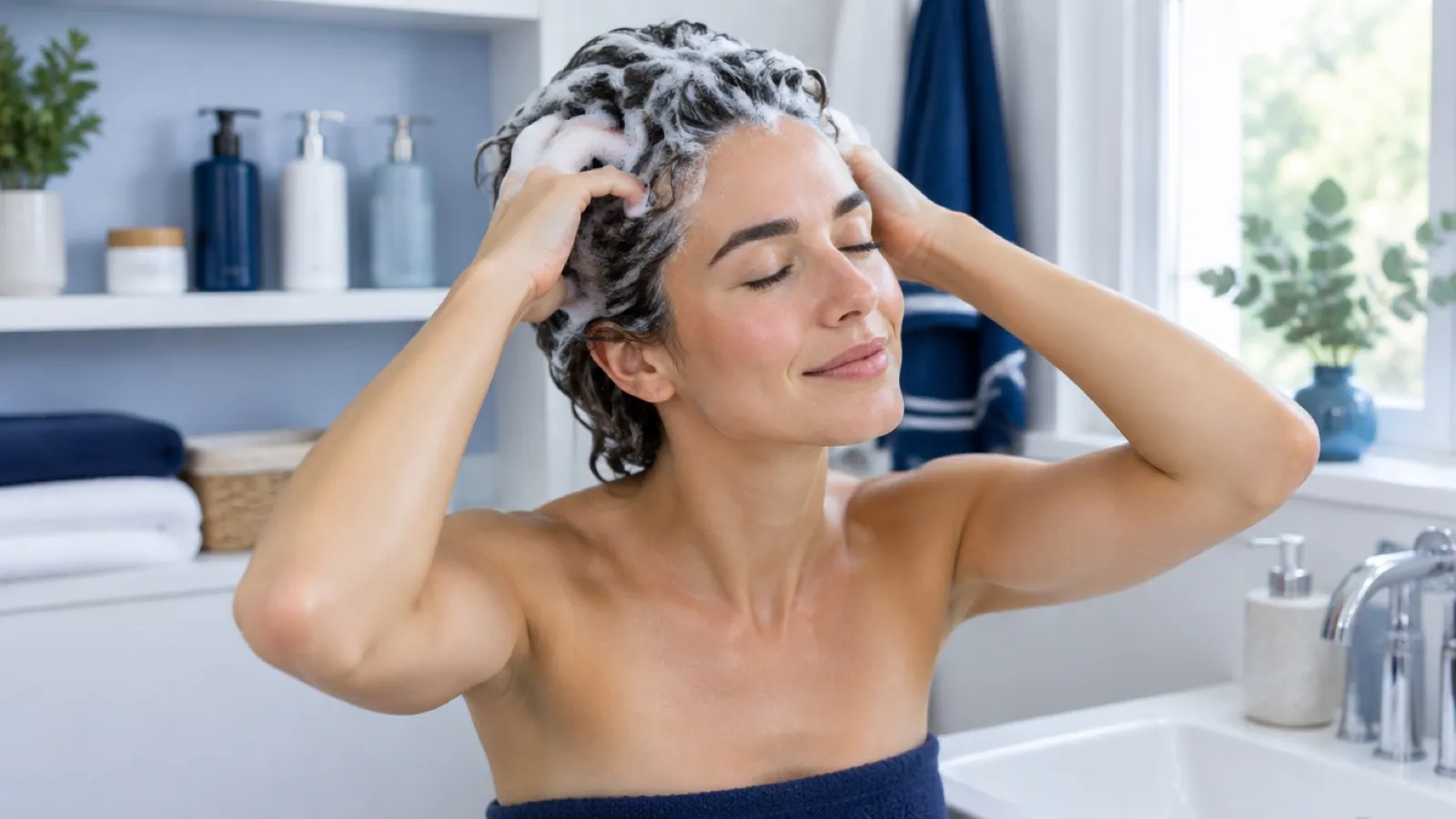
How to Improve Scalp Health: A Step by Step Routine
How to improve scalp health in nine sourced steps: how often to wash, how to shampoo, managing flakes, sun care, and when a scalp problem needs a physician.
Itchy Scalp Causes: 10 Reasons and When to Refer
Itchy scalp causes explained with sources: the AAD's ten reasons, itch without dandruff, itch with hair loss, itch after coloring, and what a stylist can do.
Oily Scalp: Causes, Care and When to Refer
Oily scalp explained with sources: how sebum is made, what drives oil production, how often to wash oily hair, care approaches, and when to refer a client.