

What Is a Head Spa? Benefits, Evidence and Safety Facts
What is a head spa? An evidence-based look at what happens in the service, real head spa benefits, hair growth claims, safety, and who should see a doctor.
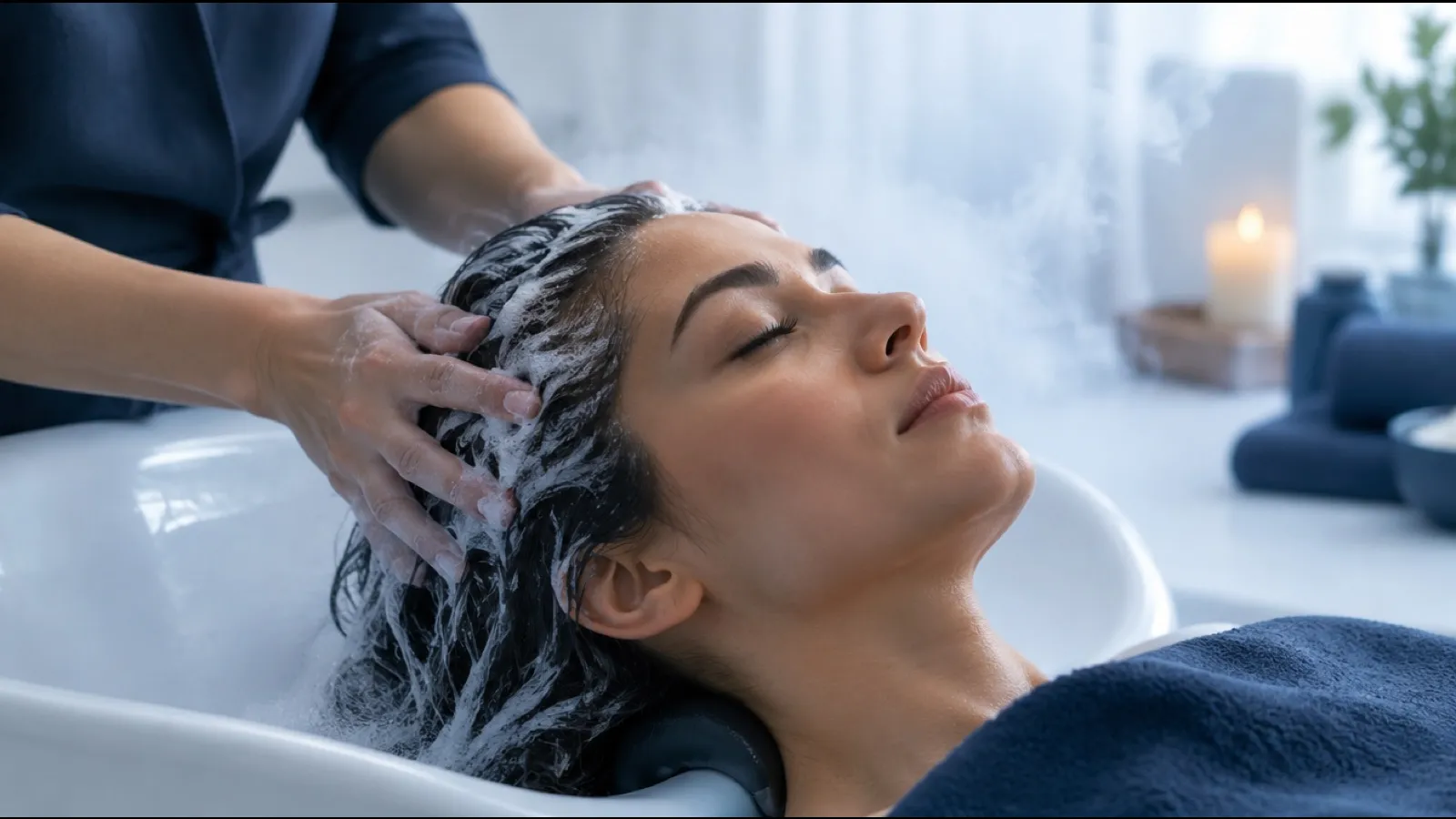
A head spa is a cosmetic service, or a business built around that service, that cleanses and massages the scalp. It is a grooming and relaxation service. It is not medical care, and it has not been shown to regrow hair.
If you searched "what is a head spa" after watching videos of water halos and magnified scalp images, this is the plain version. Below is what happens in the appointment, what a head spa can reasonably offer, what the evidence does not support, and who should see a dermatologist before booking. Salon owners looking for the business side can read how to start a head spa business.
What is a head spa and what happens during one?
A head spa is an appointment built around the scalp instead of the haircut. A 2025 paper in the Journal of Drugs in Dermatology summarized the usual sequence: a scalp analysis, followed by scalp cleansing, scalp massage, and finally hair styling. Most of the visit takes place lying back at a treatment bed or shampoo bowl.
California's Board of Barbering and Cosmetology has described head spas in an industry bulletin. It calls them establishments specializing in "scalp facials" and lists the services they often provide:
- Cleansing, steaming and exfoliation to remove buildup and oils
- Scalp massage
- Neck, shoulder and facial massage for relaxation
- Hair masks for deep conditioning
- Shampooing and blow-drying hair
The scalp analysis step
Many head spas begin by showing you magnified images of your scalp on a screen, then repeat the images after the service. A well-trained technician uses these to describe what is visible, such as oil, flaking or product residue. The images are not a medical examination, and a cleaner-looking scalp afterward shows that cleansing happened. It does not show that a condition was fixed.
What is a Japanese head spa?
"Japanese head spa" is the name this service is most often sold under in the US. It generally signals a long, quiet, relaxation-focused scalp service with running water, steam and extended massage. It is a style label. It is not a regulated term, a license or a clinical standard.
Because nobody defines the term, two businesses using the same name can offer very different services. One may be a thirty-minute cleanse and massage. Another may add scalp imaging, exfoliation, masks and a full blow-dry. Ask for the step-by-step list before you book, and ask who performs each step.
What are the real head spa benefits?
The benefits a head spa can reasonably offer are cosmetic and sensory: a thoroughly cleansed scalp, less product buildup and oil, relaxation, and a scalp that feels comfortable afterward. Those are worthwhile on their own. They do not need to be dressed up as medical outcomes to justify the visit.
| What a head spa can reasonably offer | What is not established |
|---|---|
| A deep cleanse of the scalp and hair | Regrowing hair or stopping hair loss |
| Removal of product buildup and excess oil | Treating dandruff, psoriasis or dermatitis |
| A relaxing massage of the scalp, neck and shoulders | "Detoxifying" the scalp or follicles |
| A scalp that feels clean and comfortable | Diagnosing a scalp condition from magnified images |
| A look at your own scalp under magnification | Replacing a visit to a dermatologist |
If flaking is your main concern, it helps to know what kind you have before spending money on any service. Our guide to dandruff vs dry scalp vs buildup explains the differences. Buildup is a cleansing problem. Dandruff may need a different approach, and persistent or inflamed flaking is a reason to see a dermatologist.
Does a head spa help hair growth?
No good evidence shows that a head spa service helps hair growth. Head spa services as a package have not been tested in clinical trials that we could find. The research people usually point to is about scalp massage alone, it is small, and it does not match what happens in a salon visit.
What the scalp massage study found
The most cited study was published in the journal Eplasty in 2016. Here is what it did and found:
- Who: nine healthy men.
- What: four minutes of standardized scalp massage per day with a massage device, on one side of the scalp, for 24 weeks. The other side was the comparison.
- Result: hair thickness in the massaged area increased from 0.085 mm to 0.092 mm at 24 weeks.
- Also found: hair growth rate did not change significantly, and hair count in the massaged area was lower at 12 weeks.
That is an interesting early finding about hair thickness. It is not proof of regrowth. Nine men is a very small group, the massage was daily for almost six months, and nobody in the study had a head spa service. An occasional salon appointment is a different thing.
Why the claim matters legally
The FDA states that claims that a product will restore hair growth cause it to be considered a drug. A head spa that promises regrowth is making a claim it cannot support. The dermatologists who wrote the 2025 Journal of Drugs in Dermatology paper reviewed 30 head spas and raised concern that clients may receive inappropriate advice from untrained workers instead of seeking care from board-certified dermatologists.
If your real concern is thinning, read hair shedding vs hair loss first. The American Academy of Dermatology says it is normal to shed between 50 and 100 hairs a day, and that a dermatologist can tell you whether you have hair loss or excessive shedding and find the cause.
What is the difference between a head spa and a scalp treatment?
A scalp treatment is usually a single service step, often added to a haircut or color. A head spa is a full appointment designed around the scalp from start to finish. The words overlap in marketing, and neither one is medical treatment.
| Scalp treatment | Head spa | |
|---|---|---|
| Format | One step or a short add-on | A full, stand-alone appointment |
| Typical content | An exfoliating or cleansing application and rinse | Scalp analysis, cleansing, exfoliation or steam, massage, mask, shampoo, blow-dry |
| Setting | Regular salon chair and shampoo bowl | Often a treatment bed in a quiet room |
| Purpose | Cleansing | Cleansing plus relaxation |
Salon professionals who want to build either one can see how to add scalp treatments to a salon menu.
Is a head spa safe, and who should see a dermatologist first?
For someone with a healthy scalp, a head spa is a cosmetic service delivered by licensed professionals under state board sanitation rules. We did not find published safety studies of head spa services. The practical risk is less about the service and more about delay: using a spa visit in place of medical care for a problem that needs it.
See a dermatologist or physician before booking if you have any of these:
- Sudden or heavy shedding, or hair coming out in clumps
- Smooth bald patches, or a widening area of thinning
- A scalp that burns, stings, itches persistently or is painful
- Open sores, pustules, bleeding or crusting
- A diagnosed scalp or skin condition, or a current prescription for one
Early care matters with some conditions. The American Academy of Dermatology notes that many people with untreated central centrifugal cicatricial alopecia say their scalp burns, stings or itches, that the hair loss can be permanent because follicles are replaced by scar tissue, and that starting treatment early can prevent more permanent loss. A cleansing service does not address that.
Questions to ask before you book
- What exactly happens in the service, step by step?
- Who performs each step, and what license do they hold? Rules differ by state, as explained in do you need a license for a head spa.
- What training do staff have in scalp science?
- What do you do if you see something on my scalp that concerns you?
The answer to the last question tells you the most. A good head spa will say it stops, tells you what it saw, and suggests you see a dermatologist. Professionals trained through programs such as USTI's scalp health courses are taught that role: recognize, support, refer. You can also look for a trained professional in the Find a Trichologist directory. Trichologists are not physicians and do not diagnose.
So what is a head spa? A thorough scalp cleanse and a long massage, delivered as its own appointment. Book it for a clean, comfortable scalp and an hour of quiet. Do not book it to fix hair loss.
New to the field? Start with What is trichology? or look up a term in the trichology glossary.
Sources
- California Board of Barbering and Cosmetology: Industry Bulletin, Head Spas (November 2024)
- Johnson CE, Palmer V, Hordinsky M, McMichael A. Trichoscopic Images Observed in Popular Head Spa Salons: Are We Headed in the Right Direction? Journal of Drugs in Dermatology, September 2025.
- Koyama T, Kobayashi K, Hama T, Murakami K, Ogawa R. Standardized Scalp Massage Results in Increased Hair Thickness by Inducing Stretching Forces to Dermal Papilla Cells in the Subcutaneous Tissue. Eplasty, 2016.
- US Food and Drug Administration: Is It a Cosmetic, a Drug, or Both? (Or Is It Soap?)
- American Academy of Dermatology: Do you have hair loss or hair shedding?
- American Academy of Dermatology: Central centrifugal cicatricial alopecia (CCCA)
Frequently asked questions
What is a head spa?
A head spa is a cosmetic service focused on the scalp. California's Board of Barbering and Cosmetology describes head spas as establishments specializing in scalp facials. A visit usually includes a scalp check, cleansing, exfoliation or steam, massage, a hair mask, and a shampoo and blow-dry. It is a relaxation and grooming service, not medical care.
Does a head spa help hair growth?
There is no good evidence that a head spa service regrows hair. One small 2016 study of nine men found slightly thicker hairs after daily device massage for 24 weeks, with no change in growth rate. That is not the same as an occasional salon visit. Anyone losing hair should see a dermatologist.
What are the real benefits of a head spa?
The reasonable benefits are a thoroughly cleansed scalp, removal of product buildup and oil, relaxation from the massage, and a scalp that feels more comfortable. Some clients also value seeing magnified images of their own scalp. These are cosmetic and comfort benefits. They are not treatment for any scalp or hair condition.
Is a head spa safe?
For a person with a healthy scalp, a head spa is a cosmetic service performed by a licensed professional under state sanitation rules. It is not suitable as a substitute for medical care. If you have open sores, pain, burning, bald patches or a diagnosed scalp condition, see a dermatologist first and follow their advice.
What is the difference between a head spa and a scalp treatment?
A scalp treatment is usually one service step, such as an exfoliating or cleansing application, often added to a haircut. A head spa is a full appointment built around the scalp, with consultation, several cleansing steps, massage and a finish. Neither is a medical treatment, despite the word treatment in the name.
What is a Japanese head spa?
Japanese head spa is the name this style of service is commonly marketed under in the US. It usually means a long, relaxation-focused scalp service on a reclined bed with running water. The label describes a style. It is not a regulated term or a medical standard, so the content varies from one business to another.
Can a head spa technician diagnose my scalp?
No. Head spa staff can describe what is visible on your scalp and suggest you see a dermatologist, but they cannot diagnose or prescribe. A 2025 dermatology journal paper found that only 3 of 30 head spas reviewed had a trichologist on staff, and trichologists are not physicians either.
This article is educational and is not medical advice. USTI teaches professionals to recognize, support and refer.
Turn this knowledge into a certification.
Learn hair and scalp science with USTI educators, from your first course to clinical training.
Explore trichology coursesRelated articles
Do You Need a License for a Head Spa? Rules by State
Do you need a license for head spa services? See which licenses cover scalp work, what four states say in writing, and the questions to ask your board.
How Much to Charge for Head Spa Services: Pricing Guide
How much to charge for head spa services: a cost-based pricing formula, a four-tier service menu, and the one published US price range to benchmark against.

How to Add Scalp Treatments to a Salon Menu: A Guide
How to add scalp treatments to a salon menu: start with a consultation and scope check, then build service tiers, train staff and avoid medical claims.